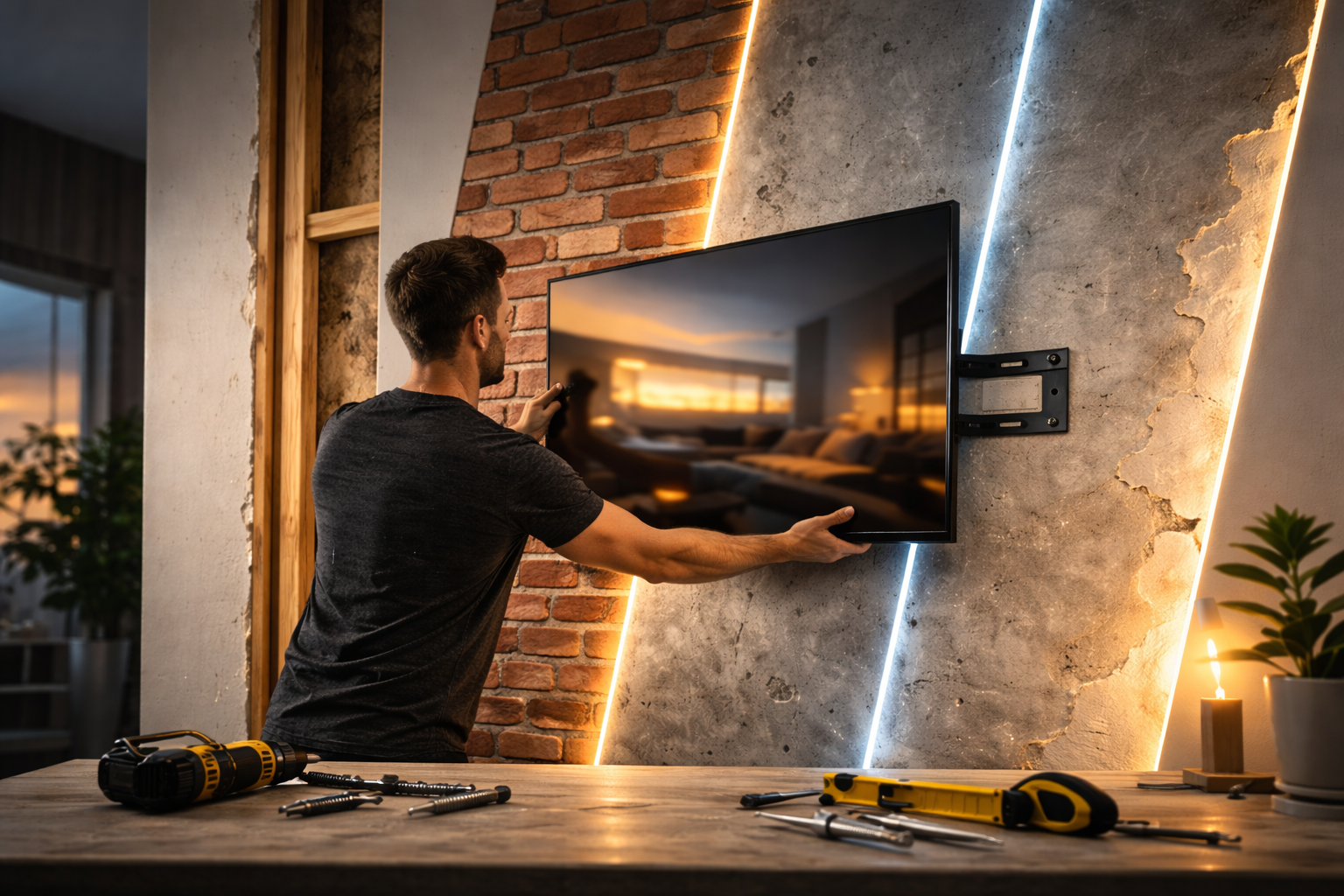
How to Wall Mount a TV on ANY TYPE OF WALL
Mounting a TV on the wall is one of the easiest ways to make a room look cleaner and more modern. It frees up space, improves the viewing angle, and eliminates bulky TV stands. But one thing many DIY guides skip over is that different wall types require completely different installation methods. What works on drywall can fail on brick or concrete if the wrong hardware is used.
Before starting, you need the right mount for your TV size and weight. Most mounts fall into three categories: fixed mounts (flat against the wall), tilting mounts (angle the TV slightly downward), and full-motion mounts (extend and swivel for flexible viewing angles). Always check that the mount supports your TV’s weight and matches the VESA pattern on the back of the TV.
For drywall with wood studs, the most common wall type, the key rule is simple: the mount must attach directly to the studs. Drywall alone cannot support the weight of a TV. Use a stud finder to locate the studs, drill pilot holes, and secure the mount using lag bolts. A level is essential here to make sure the TV sits perfectly straight.
If you're mounting on brick or concrete, the process changes. These materials are very strong but require a hammer drill and masonry drill bits. Instead of lag bolts, you’ll use concrete anchors or sleeve anchors to secure the mount. When drilling into brick, it’s important to drill into the brick itself rather than the mortar joints, which are weaker.
Older homes may have plaster walls, which can crack easily during installation. In most cases the safest approach is still to find the studs behind the plaster and mount directly into them. If studs aren’t available in the right position, specialized anchors or mounting plates may be required to distribute the weight properly.
Regardless of wall type, accurate measuring and proper hardware are what make the difference between a secure installation and a risky one. The most common mistakes people make are missing the studs, using the wrong anchors, or skipping the leveling step—resulting in crooked TVs or unstable mounts.
When done correctly, a wall-mounted TV should sit perfectly level, feel solid when touched, and keep cables organized for a clean look. Taking the time to match the installation method to the wall type is what ensures your TV stays safely mounted for years to come.
Mounting a TV on the wall is one of the easiest ways to make a room look cleaner and more modern. It frees up space, improves the viewing angle, and eliminates bulky TV stands. But one thing many DIY guides skip over is that different wall types require completely different installation methods. What works on drywall can fail on brick or concrete if the wrong hardware is used.
Before starting, you need the right mount for your TV size and weight. Most mounts fall into three categories: fixed mounts (flat against the wall), tilting mounts (angle the TV slightly downward), and full-motion mounts (extend and swivel for flexible viewing angles). Always check that the mount supports your TV’s weight and matches the VESA pattern on the back of the TV.
For drywall with wood studs, the most common wall type, the key rule is simple: the mount must attach directly to the studs. Drywall alone cannot support the weight of a TV. Use a stud finder to locate the studs, drill pilot holes, and secure the mount using lag bolts. A level is essential here to make sure the TV sits perfectly straight.
If you're mounting on brick or concrete, the process changes. These materials are very strong but require a hammer drill and masonry drill bits. Instead of lag bolts, you’ll use concrete anchors or sleeve anchors to secure the mount. When drilling into brick, it’s important to drill into the brick itself rather than the mortar joints, which are weaker.
Older homes may have plaster walls, which can crack easily during installation. In most cases the safest approach is still to find the studs behind the plaster and mount directly into them. If studs aren’t available in the right position, specialized anchors or mounting plates may be required to distribute the weight properly.
Regardless of wall type, accurate measuring and proper hardware are what make the difference between a secure installation and a risky one. The most common mistakes people make are missing the studs, using the wrong anchors, or skipping the leveling step—resulting in crooked TVs or unstable mounts.
When done correctly, a wall-mounted TV should sit perfectly level, feel solid when touched, and keep cables organized for a clean look. Taking the time to match the installation method to the wall type is what ensures your TV stays safely mounted for years to come.